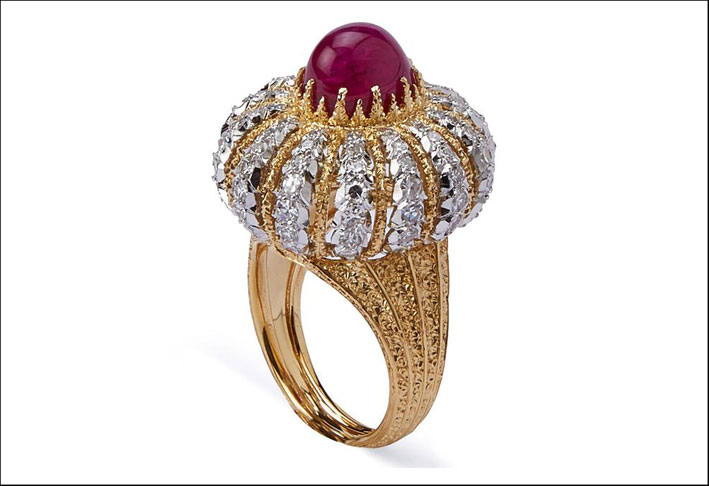
Anello a turbante con rubino cabochon, 1972

Buccellati in Venaria

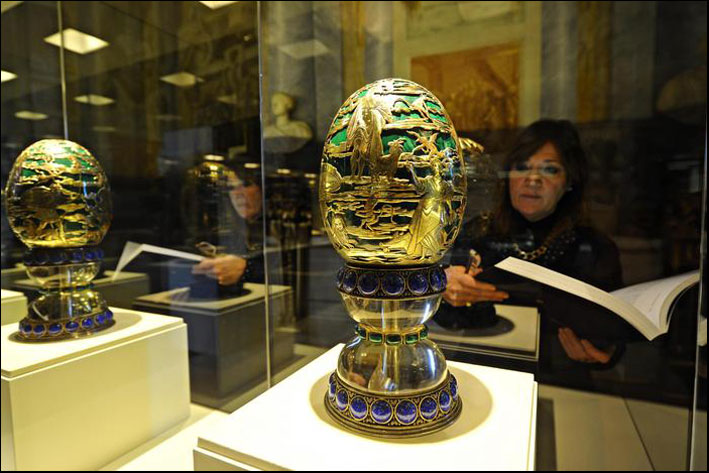
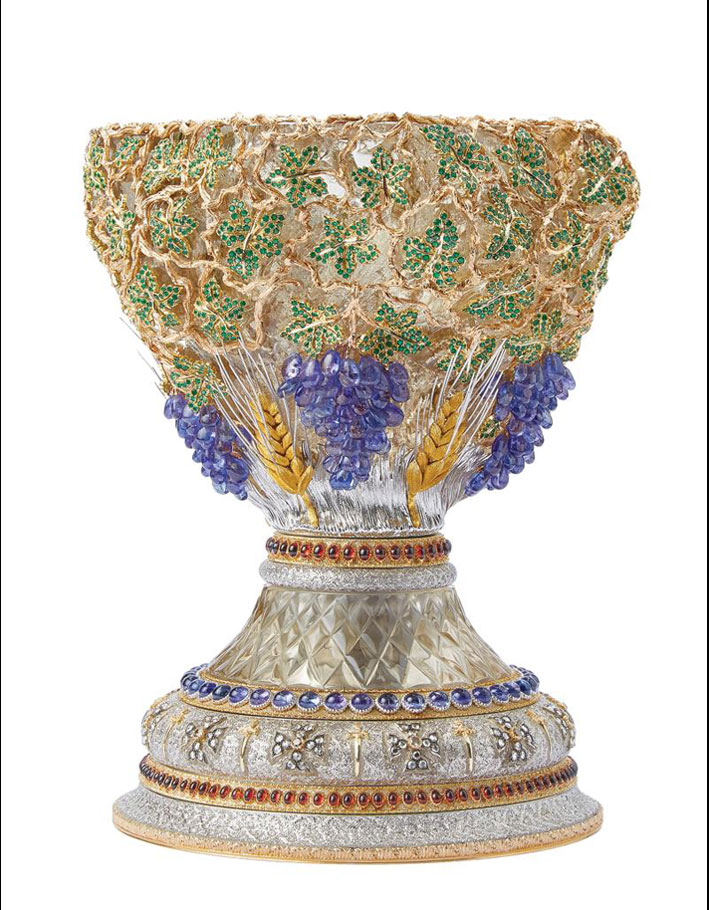
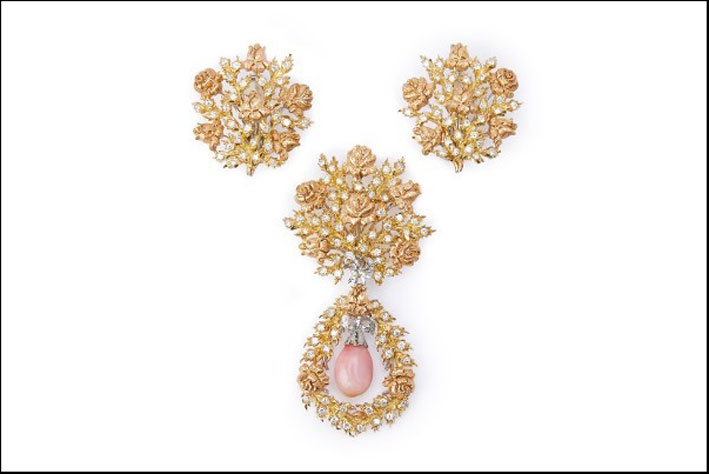
At Venaria Palace, near Turin, comes the great exhibition dedicated to Gianmaria Buccellati. The exhibition follows that of Florence and is a tribute to the art of the jeweler Florentine goldsmith. The exhibition („The art of beauty. The jewels of Gianmaria Buccellati,“ March 21 to August 30), organized by Gianmaria Buccellati Foundation and the Foundation for the Study of Art Goldsmith, with the coordination of the Swiss Luxury Culture Management, offers a selection of the works of jewelry. Gianmaria Buccellati, born in 1924, continued the experience of the father Mario, who in 1919 opened his first boutique of fine jewelry in Milan, where he met Gabriele d’Annunzio, who described him as the „prince of the goldsmiths“. The exhibition is organized into three sections. According Chiara Tinonin, curator of the exhibition, „The jewelry, the jewelry creations and silver that Gianmaria Buccellati started drawing very young and has produced throughout life are represented in the exhibition by 108 valuable pieces, each one unique, and willing in a chronological journey that explores the origin creative drawing his autobiographical stories. But there are not just objects. The attention to the cultural and artistic expressions of the past, the deep knowledge of the goldsmith and its secrets, and his aesthetic sense, enhanced by the shots of the photographer Giò Martorana. “ For the curator, to Buccellati is a tradition that follows the great schools of the Renaissance, classical and eighteenth centuries. But now, with a jewelry that often follows the trend of the moment and the rhythms of industrial production, is also a cultural heritage that is likely to get lost. Federico Gragliaspilla-e-orecchini mostra-firenze gianmaria-buccellati-graljpg
Schreibe einen Kommentar

Your email address will not be published.

Previous Story

Yoko London, sind Perlen cool

Next Story

Tiffany, 2014 brillante ma non d’oro

Anello a turbante con rubino cabochon, 1972

Buccellati in Venaria

Bei Venaria Palace, in der Nähe von Turin, kommt das große Ausstellung Gianmaria Buccellati gewidmet. Die Ausstellung folgt, dass von Florenz und ist eine Hommage an die Kunst des Florentiner Goldschmied Juwelier. Die Ausstellung („Die Kunst der Schönheit. Die Juwelen von Gianmaria Buccellati“, 21. März – 30. August), von Gianmaria Buccellati Stiftung und der Stiftung für das Studium der Kunst Goldsmith, mit der Koordination der Schweizer Luxus-Kulturmanagement organisiert und bietet ein Auswahl der Werke von Schmuck. Gianmaria Buccellati, geboren 1924, weiterhin die Erfahrung des Vaters Mario, der im Jahr 1919 eröffnete seine erste Boutique edlen Schmuck in Mailand, wo er Gabriele d’Annunzio, der ihn als „Prinz der Goldschmiede“ beschrieben erfüllt. Die Ausstellung ist in drei Abschnitte gegliedert. Nach Chiara Tinonin, Kurator der Ausstellung „Die Schmuck, die Schmuckkreationen und Silber, die Gianmaria Buccellati begann Zeichnung sehr jung und hat im Laufe des Lebens hergestellt werden in der Ausstellung um 108 wertvolle Stücke, repräsentiert jedes einzigartig, und bereit sind, in eine chronologische Reise dass untersucht die Entstehung kreativer Zeichen seinem autobiographischen Geschichten. Es gibt aber nicht nur Objekte. Die Aufmerksamkeit auf die kulturellen und künstlerischen Ausdrucksformen der Vergangenheit, die tiefe Kenntnis der Goldschmied und seine Geheimnisse, und sein Sinn für Ästhetik, durch die Aufnahmen von der verbesserten Fotografen Giò Martorana. „Für den Kurator, um Buccellati ist eine Tradition, die großen Schulen der Renaissance, Klassik und achtzehnten Jahrhundert folgt. Aber jetzt, mit Schmuck, die oft folgt dem Trend der Zeit und den Rhythmus der industriellen Produktion, ist auch ein kulturelles Erbe, das sich zu verlieren ist. Federico Graglia

spilla-e-orecchini mostra-firenze gianmaria-buccellati-graljpg

Previous Story

Yoko London, sind Perlen cool

Next Story

Tiffany, 2014 brillante ma non d’oro